

The small salami that shouldn’t have existed
Stortina. It is called this because it is crooked. A small, curved salami, weighing less than two hundred grams. It was born in the plains south of Verona — the Bassa Veronese. Outside of that area, almost no one knows what it is.
Where it comes from
There is no battle. There is no king. There is something simpler and truer: the life of the peasants of the Veronese plains.
For centuries, every family raised pigs. When it came time for slaughter, nothing was thrown away. The stortina was born this way — from the same recipe passed from father to son, from grandmother to grandchild, without ever being written down.
Only noble parts: shoulder, loin, ham, culaccia, and pancetta. Garlic macerated in white wine. Salt and pepper. Zero preservatives. Just as it used to be done — because that was simply how it was done.
The problem and the ingenious solution
The stortina is small. Too small.
Such a tiny salami dries out quickly. It does not last through the winter.
They could have made it larger. But they would have betrayed what it was.
So, the peasants took terracotta pots and placed the small salamis in alternating layers with ground and salted lard. At the top, a thick layer — the ‘hat’ — sealed and protected everything.
The pot went into the cellar. And they waited.
Months later, the ‘hat’ had yellowed and had to be discarded. But underneath, the stortine were incredibly soft and fragrant — better than any air-cured salami.
They only wanted to preserve them. They obtained a unique cured meat.
How to eat it
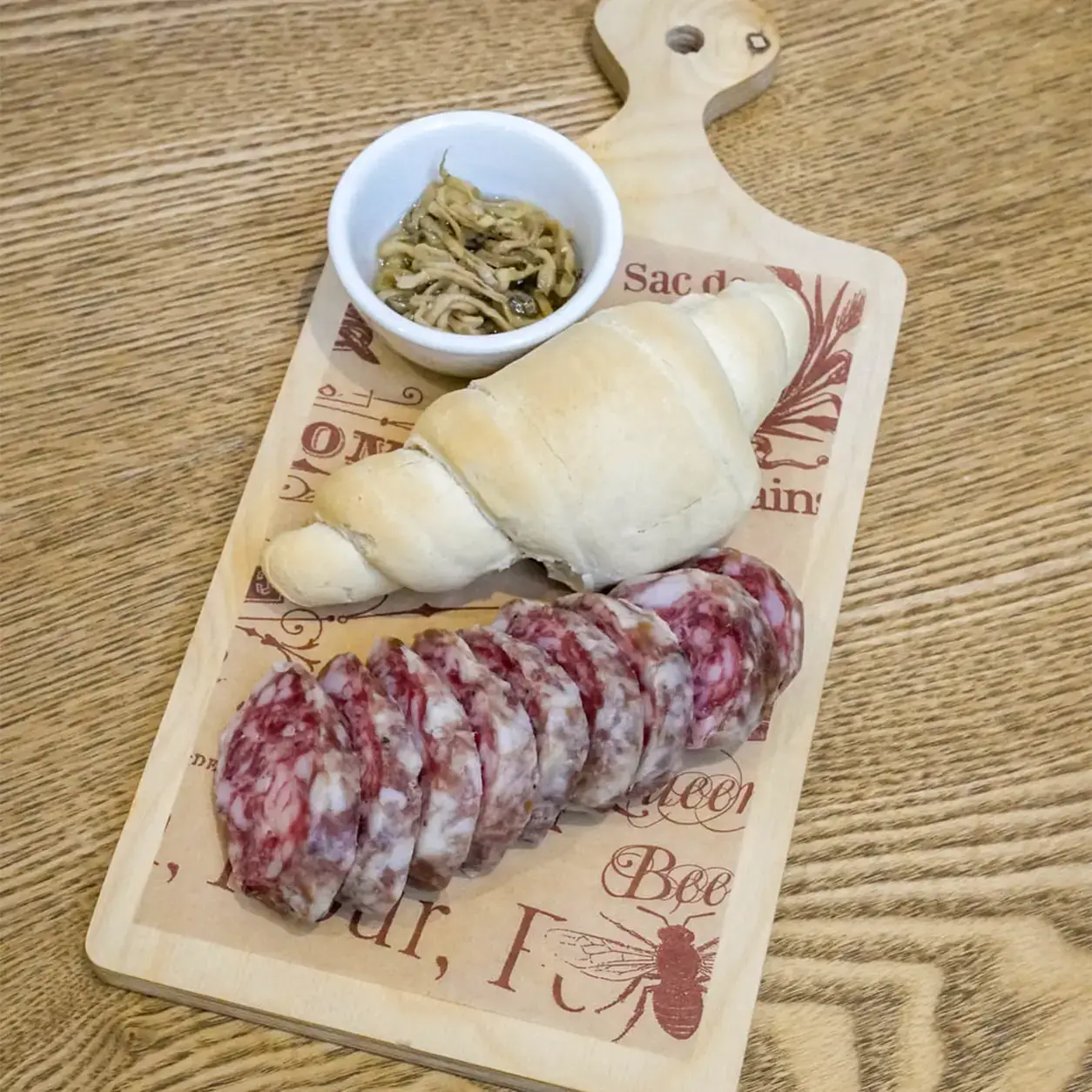
With fresh bread or toasted polenta. The lard that covers it is spread on the bread. However, every family had its own way of enjoying it, and it was often served with dry bread and vegetables in oil.
At Dalla Bruna, we serve it exactly like that, with ‘pan biscotto’ and eggplants in oil. Seeing is believing. To be paired with a Valpolicella Classico.
A cured meat that was disappearing
Making it requires time, care, and high-quality raw materials. Few people still know how to make it properly. For this reason, it was disappearing.
Then came Slow Food, which included it among its Presidia — traditional Italian products at risk of extinction. Today, only three certified producers make it according to the original regulations.
Every year in Cerea, the Palio della Stortina is held, a competition between pork butchers and amateur producers now in its 29th edition. The public tastes and votes. The winner becomes the ‘Stortinaro’ of the year.
Today
It is made less and less in homes. Outside the Bassa Veronese, almost no one knows it.
But those who taste it once never forget it.
At Dalla Bruna, you can still find it. Since 1971. Just as it has always been made.


