

A 1,500-year-old story
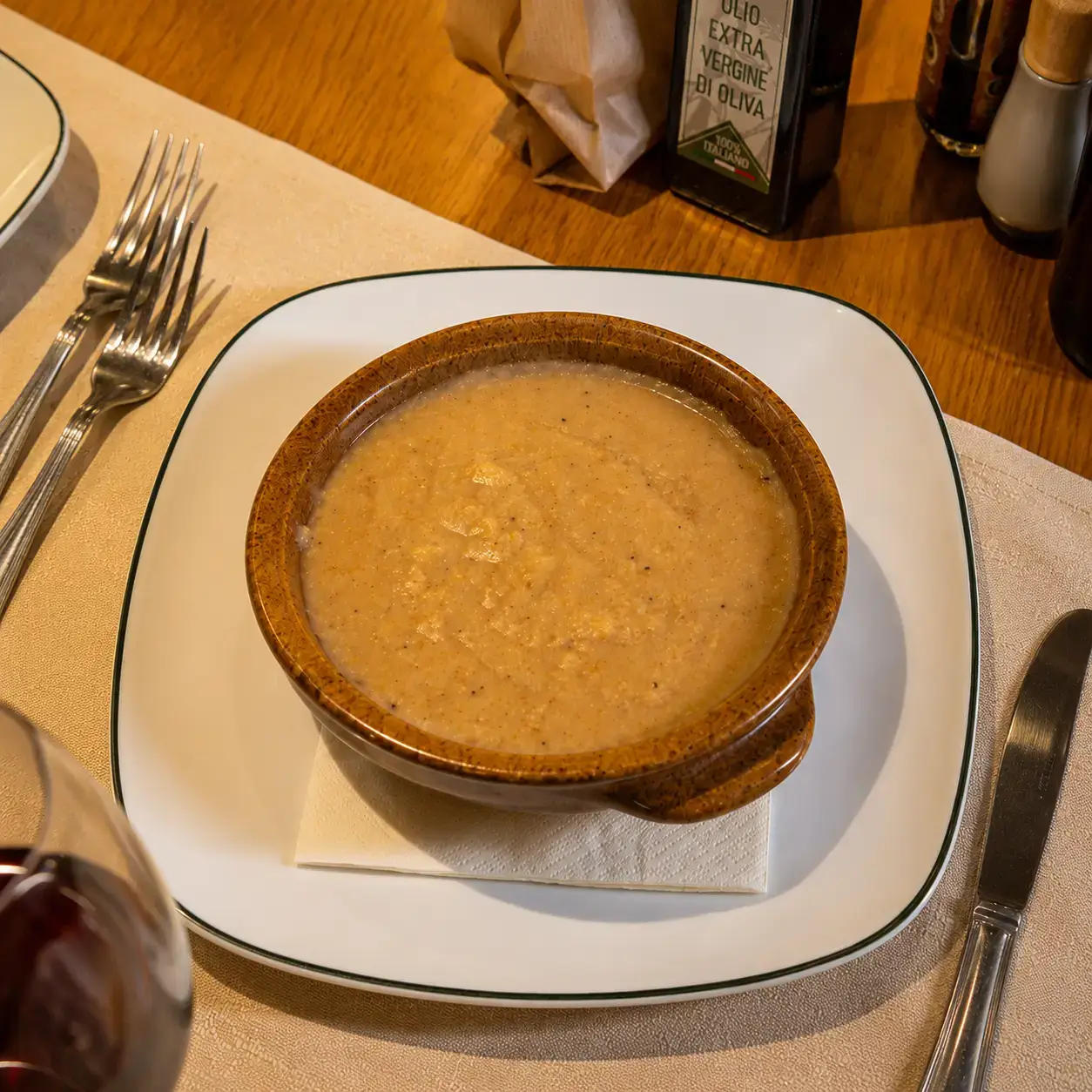
Pearà, in the Veronese dialect, means “peppery.” It is a sauce prepared with just a few ingredients: bread, broth, beef marrow, and plenty of black pepper.
Yet, behind this apparently simple dish lies a story that begins in the distant past.
How Pearà was born
The year is 572 AD, in Verona.
Alboin, King of the Lombards, has just won a war. To celebrate, he takes the skull of the enemy king, turns it into a cup, and forces his wife Rosamund—the daughter of that man—to drink from it.
Rosamund stopped eating. She was letting herself die.
The court cook took what he had available: dry bread, broth, and beef marrow. He added a handful of black pepper—which at the time was worth as much as gold—and let it all cook slowly.
He brought the sauce to Rosamund. She ate and recovered.
The sauce that, according to tradition, saved her was called pearà.
From a dish for kings to a dish for everyone
In the Middle Ages, pepper was a rare and precious spice. For this reason, originally, pearà was a dish reserved for noble tables.
Over time, it also entered the homes of common people.
Those with little money used little pepper. Those who could not afford it prepared a version called Panà.
But without pepper, pearà was no longer truly pearà.
Sunday lunch
For generations, preparing pearà meant organizing an entire meal.
First came the broth with paparele. Then the boiled meat—tongue, hen, and beef brisket—accompanied by the pearà, served in an earthenware pot while still simmering.
It was Sunday lunch. It was Christmas lunch. It was the moment when the whole family gathered around the same table.
Every family had its own version. And its own debate:
Does cheese go in it or not?
In Verona, this topic is still debated today.
A sauce unique in the world
Pearà is found only in Verona and the surrounding areas.
In 2012, the Municipality of Verona recognized it as a De.Co. — Municipal Designation of Origin .
An official recognition that affirms something very simple:
Pearà belongs to Verona.
Pearà today
Today, in homes, pearà is prepared less and less.
The time available has decreased, and the long traditional cooking times have almost disappeared.
But no one has forgotten that flavor.
Dalla Bruna has been preparing it since 1971.
Just as it has always been made.


